The $60 Million Dollar Baltimore Bridge Collapse: Your Wallet

Pictures of the damaged Baltimore Bridge collapse will be burnt in our minds forever. As always, more questions than answers remain. There are many theories on why and how this could happen. Getting to the heart of the matter, it’s still happening. Of course, we all mourn for those who were directly affected. But what is the long term damage?
Container Ship Dali
The container ship Dali struck Baltimore’s Francis Scott Key Bridge at about 1:30 a.m. Tuesday, partially collapsing the bridge, officials in Maryland said. One thing is for sure, cleaning this up maybe a long, tedius and dangerous mission. According to ABC News:
Crews continue to assess and monitor for spilled oils and hazardous substances to prevent further discharge,” the Unified Command said in a statement Thursday.
“We have been conducting air monitoring on the vessel and around the vessel with our contractor. No volatile organic compounds or flammable vapors were observed,” the Unified Command said. “Pollution and debris removal operations are on-going. At this time, no atmospheric hazards have been detected.”
Of the damaged containers, perfumes and soaps make up the majority of the 13 impacted containers with hazardous materials, according to the Unified Command. The state of Maryland has requested $60 million in emergancy relief funds from the Federal Government.
The Baltimore Bridge Collapse Long Term Affects
While that may seem as an odd question, will the collapse affect us financially? But how?
According to Brookings.edu, we can expect an economic impact, on top of the emotional impact. The bridge wreckage now sits in the channel that connects Baltimore Harbor to the Chesapeake Bay, effectively closing the Port of Baltimore, a top 10 port in size. Expert Joe Kane told Brookings.edu:
“On an annual basis, there are about 50 million tons of goods valued at about $80 billion that go to and from the port each year. But then digging even deeper into that, particular products passing through the port, including automobiles in particular, it’s the top port for for auto goods and transportation equipment actually “
Cars? Well who knows more about that locally than Ernie Boch Jr. Boch owns the main distribution point for Subaru of New England. CBS Boston spoke with Ernie:
The port is the tenth largest in the country, and without access to it for an indefinite period, it’s more than just a glitch in the supply chain. “Everything is in flux, it’s like an amoeba with everything moving and decisions are being made as we speak,” said Boch. In fact, a cargo ship carrying 1,100 of his vehicles passed through the Port of Baltimore just hours before the collapse.”
The port does not just move cars. It is crucial for billions of dollars’ worth of goods like heavy equipment, military hardware, and consumer products. Our coffee may cost more as well. The Port of Baltimore reportedly brought in a half billion dollars’ worth of coffee and $400 million dollars’ worth of sugar. Where the rubber meets the road, no pun intended, the longer the port remains closed, will be how big of a financial impact will be felt.
The bridge itself is a symbol of significance, known for transporting more than just cars. According to npr.com:
The bridge is the outermost of three toll crossings of Baltimore’s Harbor, and the only one that’s not a tunnel. It was constructed to alleviate traffic and provide a route for vehicles carrying hazardous materials, which are not allowed in the tunnels.
Now with the Baltimore bridge collapse, vehicles carrying hazardous materials, which are not allowed in the tunnels, will now have to find a new route.
Check back here for updates on the Baltimore Bridge Collapse.
Top Mistakes That Can Get You Hacked
Reusing Passwords
Many of us are still using the same password across many different accounts. While it’s pretty common, it’s not a good habit to have. If you’re reusing passwords for multiple websites and accounts, a hacker could potentially use that password to log into those accounts. Nobody wants to have to remember a 16-digit password for every single one of their accounts, especially when getting locked out of a computer or platform at the most inconvenient time. But if a security breach were to happen, that’s one less problem to worry about. Like, remembering which accounts are at risk of a threat.
Thanakorn Lappattaranan/ Getty Images
Oversharing On Social Media
Personal data exposure is really a thing. When you share personal information on social media, you expose yourself to the risk of identity theft and fraud. According to the New York Institute of Technology, Cybercriminals can use the information you share, such as your full name, date of birth, and location, to impersonate you or launch targeted attacks. Most people know that sharing sensitive information such as your car information, address, work history, or phone numbers can make you vulnerable. But some people forget that this information can also be identified through pictures and innocent as sharing your new car photo or your child’s first day of school photo.
Suchat longthara/ Getty Images
Using Unsecure Wi-Fi
Hackers can use unsecured Wi-Fi connections to distribute malware. If you allow file-sharing across a network, the hacker can easily plant infected software on your computer. Free public Wi-Fi is available almost everywhere at places like restaurants, hotels, airports, bookstores, and even retail outlets. But public wi-fi comes with risks. “Hackers can also use an unsecured Wi-Fi connection to distribute malware. If you allow file-sharing across a network, the hacker can easily plant infected software on your computer,” said Kaspersky, a tech company. Some people highly recommended looking into a VPN to encrypt internet traffic and keep your data hidden.
Jens Domschky/ Getty Images
Clicking Suspicious Links
Clicking on a suspicious link or phishing link can sometimes set off a malware download that often contains malicious files. According to Aura, a credit monitoring platform, these links are capable of collecting information stored on your device. Hackers can steal credit card numbers, bank account numbers, usernames and passwords, and other personal information. If you’ve clicked on a phishing link, Cyber Tec Security suggest completely disconnecting from the internet.
DragonImages/ Getty Images
Out-Of-Date Software
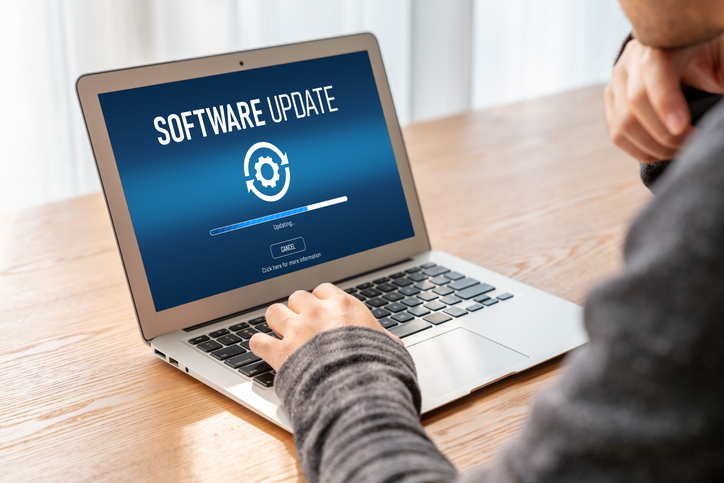
The last thing many of us want to do is update our software. But there are many reasons why it’s important to do so. Software updates not only fix and improve problems with your software it also helps you avoid hackers. According to the University of Idaho, software updates often include patches that fix vulnerabilities or bugs that hackers can exploit to access your system or data. “By installing the latest updates, you can reduce the risk of cyberattacks and protect your personal and business information,” they said.
Ralf Hahn/ Getty ImagesNot Using Multi-Factor Authentication
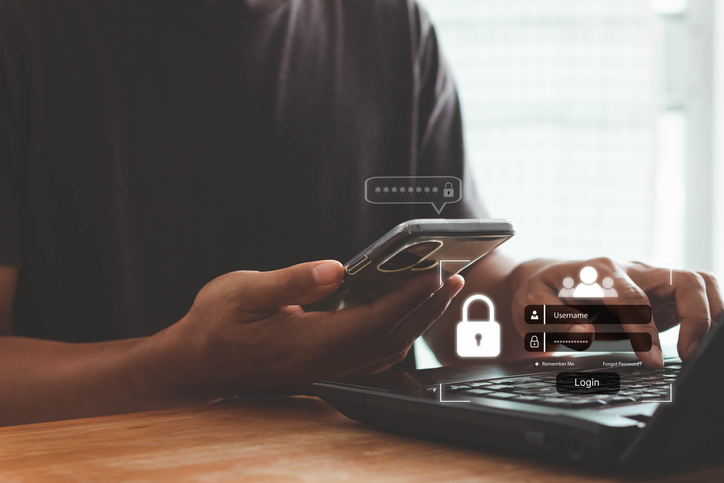
One of the most effective things you can do to protect your online accounts is turning on multi-factor, or two-factor, authentication for as many of your accounts as possible. This method often uses a piece of information such as a code generated by an app or sent to your phone alongside a password. Two-factor authentication adds an additional layer of security to the authentication process. According to Tech Target, using multi-factor authentication makes it harder for attackers to gain access to a person’s devices or online accounts. Most companies have this in place for their employers but it’s something you can use for personal emails too.
tsingha25/Getty Images
